The post Guild Member Spotlight: Williams & Goodwin – Putting customers at the heart of everything appeared first on Williams & Goodwin.
]]>For independent estate agents, delivering an outstanding customer experience is about more than completing a transaction. It is about building trust, understanding local communities and supporting people through one of life’s biggest decisions.
For Williams & Goodwin, this philosophy has been at the heart of the business for more than 25 years. Based in North West Wales, the award-winning independent agency has built a strong reputation for professionalism, local expertise and personal service – qualities that continue to earn recognition from customers at The ESTAS Awards.
This year, the business celebrated further success, winning Best in Postcode, Best in County and Bronze in Wales, adding to an impressive history of ESTAS recognition that has included Gold in Wales and the accolade of Best in the UK.
Local knowledge, personal service and a wealth of expertise
With a team whose experience in estate agency stretches back to the mid-1980s, Williams & Goodwin combines decades of industry knowledge with a deep understanding of the North West Wales property market.
The business offers a comprehensive range of services, including residential sales and lettings, property management, auctions, commercial property, and new homes and developments. The team also provides specialist advice on probate valuations and investment and buy-to-let opportunities.
A particular point of difference is the agency’s All Wales Auction team, which has more than 28 years of experience selling properties at auction. This breadth of expertise means clients can receive informed advice on the most appropriate route to market, supported by experienced, in-house specialists.
The business also recognises the importance of serving its community in the language its customers feel most comfortable using, with a bilingual team offering services in both Welsh and English.
Customer feedback at the heart of success
The ESTAS Awards are particularly meaningful because they are based on genuine customer feedback, recognising the agents who consistently deliver an excellent experience throughout the property journey.
For Williams & Goodwin, that recognition reflects a clear set of principles.
“Our team lives and works in North West Wales, so we truly understand the local property market and the needs of our community,” explains Melfyn Williams. “We pride ourselves on offering a friendly, approachable and personal service to every client.”

Communication is another key priority. Recognising that buying, selling or letting a property can be stressful, the team works hard to keep clients informed at every stage, providing prompt responses and clear, consistent updates.
This is underpinned by a qualified and experienced team, with staff holding relevant qualifications and benefiting from ongoing industry knowledge. Whether arranging flexible viewing appointments, tailoring marketing strategies or negotiating on behalf of clients, the focus remains on going the extra mile.
Consistency is equally important. Repeat business and recommendations are a significant source of pride for the agency, demonstrating the value of relationships built on trust, reliability and results.
The advantage of being part of The Guild
As a Member of The Guild of Property Professionals, Williams & Goodwin benefits from being part of a carefully selected network of leading independent estate agents across the UK.
For Melfyn and his team, membership brings several advantages, from professional development and industry support to enhanced marketing opportunities.
Access to training, legal updates and best-practice guidance helps the team stay informed about changing legislation, compliance requirements and market developments, supporting the delivery of knowledgeable, professional advice.

Membership also gives the business the opportunity to promote properties beyond its immediate local market. Through The Guild’s national network, online presence and Park Lane office in London, Williams & Goodwin can help its clients reach a wider audience of potential buyers, including those relocating from other parts of the country.
The wider network also creates opportunities to share knowledge, resources and referrals with like-minded professionals, helping independent agents strengthen their offering while retaining the local expertise and personal approach that make them distinctive.
For clients, Guild membership provides an additional level of reassurance, demonstrating a commitment to professional standards, integrity and customer care.
The relationship has also been reflected in industry recognition, including a Silver award in Wales in 2023 and success at The Guild’s 30th Anniversary Awards in 2025, where Williams & Goodwin received Best UK Letting Agent and Silver in the Best UK Estate Agent class.
A commitment to excellence that continues
With an extensive range of services, decades of experience and a customer-first philosophy, Williams & Goodwin demonstrates how independent estate agents can combine local expertise with the benefits of a national professional network.
Its continued success at The ESTAS Awards is a testament to the dedication of the team and the importance it places on listening to customers, communicating clearly and delivering a consistently high standard of service.
When asked to sum up the business’s approach to customer care, Melfyn puts it simply:
“We put our clients at the heart of everything we do, delivering friendly, professional and bilingual service that’s consistently recognised for excellence.”
It is an approach that has helped Williams & Goodwin build lasting relationships across North West Wales, and one that continues to earn the trust and recognition of the people who matter most: its customers.
Congratulations to Melfyn Williams and the entire Williams & Goodwin team on their continued success at The ESTAS Awards.
At The Guild of Property Professionals, we are proud to celebrate our Members and the commitment they demonstrate to raising standards across the property industry.
The post Guild Member Spotlight: Williams & Goodwin – Putting customers at the heart of everything appeared first on Williams & Goodwin.
]]>The post Hope House Gala at St Asaph Cathedral raises £50,000 appeared first on Williams & Goodwin.
]]>The annual Gala Ball, organised by Hope House Tŷ Gobaith children’s hospices, took place at St Asaph Cathedral on Saturday, October 26, and was sponsored by the homegrown fashion brand Sisters & Seekers.
The sold-out black-tie event brought together tens of local businesses, who made donations of services, sponsorship and some amazing auction and raffle prizes.
Vanessa Marubbi, event organiser, said:
“It was a magical evening that will do so much for the children and families we support. The work we do was highlighted by Peter and Michelle Hughes, who spoke so passionately about their amazing daughter Matilda, who attends Tŷ Gobaith. All of our guests really brought the party and were so incredibly generous.”
Ms Marubbi also praised the event sponsors, including Swayne Johnson Solicitors, LL Estates, In the Welsh Wind Distillery, and Sterling Windows, as well as those who donated food and drinks, such as Harlech Foodservice and Cariad Gin.

Entertainment on the night included music from The Brass Monkees, live caricatures by Richard Ellis, and a lively auction led by Melfyn Williams of Williams & Goodwin and All Wales Auction.
Ms Marubbi said:
“Further thanks to Harlech Foodservice, Cariad Gin, Snowdon Craft Beer, Sweet Snowdonia biscuits, Kompass Wines, Edwards of Conwy, Radnor and Henley Bridge, who kindly donated food and drinks meaning we could fully maximise our fundraising.”
Melfyn Williams, auctioneer commentated:
“We were delighted to conduct the auction again this year for the amazing Tŷ Gobaith Gala Ball. It was a magical evening full of fun, laughter, warmth and generosity”
Diolch o galon
Full information about the evening at: Hope House & Tŷ Gobaith website where you could also donate for this well and worthy charity –Donate Now | Hope House Children’s Hospices
The post Hope House Gala at St Asaph Cathedral raises £50,000 appeared first on Williams & Goodwin.
]]>The post Access The Principality Building Society From Within Our Branches appeared first on Williams & Goodwin.
]]>If you’re buying, selling or letting through Williams & Goodwin, there’s a good chance you’ll want to sort out savings or mortgage-related questions at the same time. That’s now easier, because Principality Building Society has an agency inside two of our branches: Holyhead and Llangefni.

An agency means Principality is set up inside our office rather than running its own separate branch. Pop in and one of the advisors can help with questions on your Principality account, whether that’s a savings query or something you’ve been meaning to ask about saving towards a home. There’s no appointment system. It’s walk-in only, so you can drop by whenever suits.
What you can do while you’re there:
- Counter service
- Open or manage a savings account
- Passbook accounts
- General branch-based support
- Pay in cash and cheques
- Top up your Principality savings account
Both offices are wheelchair accessible, and assistance dogs are welcome.
Opening times for the Principality agency are Monday to Friday, 9:30am to 4:30pm. Closed Saturday and Sunday.
Holyhead Office: Holyhead, 2 Market Buildings, Stanley Street, Holyhead, Anglesey, LL65 1HH, 0330 333 4041
Llangefni Office: 21 & 23 Church Street, Llangefni, Anglesey, LL77 7DU, 01248 250 110
If you’re already speaking to us about a move, it’s worth asking your Principality account questions while you’re in.
The post Access The Principality Building Society From Within Our Branches appeared first on Williams & Goodwin.
]]>The post What is Happening in the Housing Market in Wales? appeared first on Williams & Goodwin.
]]>The average property price for first-time buyers in Anglesey was £197,000 and £179,000 in Gwynedd over the 12 months up to June 2026, meaning this market is more accessible than many other parts of the UK.
Also if you’re a second-stepper, (time to move onto your next property) stable pricing along with high levels of supply mean that while you may need to be realistic when pricing your current home, you may get a better deal when purchasing a larger property.
Aside from house prices, mortgage rates and availability of homes are big considerations. This article hopefully provides analysis of the current property market in North Wales, covering buying, selling and renting.
The 2026 Wales Property Market Overview
It’s important to note that the housing market is in a constant state of flux, and of course different regions and even villages having their own micro market and dynamics so, with competing sources providing slightly different figures for the Welsh property market its understandable why you would need a seasoned professional on your side, one who has been working in your area for years, is qualified and knows the market inside out.
Looking below, you’ll see some of the statistics from official sources to help you to understand what is happening in the property market in Wales right now.
The UK House Price Index revealed that the average house price in Wales in June 2026 was £213,000, an annual increase of 1.8%. 19 of the 22 local authorities in Wales saw an increase in house prices over the 12-month period, with Blaenau Gwent in South Wales having the highest increase of 8.9%, and Pembrokeshire prices decreasing the most (-4.2%).
Across the whole of Wales, sales volumes were down, recording 3,073 sales in April 2025 but a lower volume of 2,003 in April 2026. Over the last year, the annual sales volumes for properties in Wales decreased by around 16%.
The context of the drop in sales volumes is important; the Land Transaction Tax (LTT) in Wales increased by 1% on higher-rate bands from 11 December 2024. Additionally, average mortgage interest rates were decreasing through 2025, boosting buyer confidence – but the conflict in Iran starting in February 2026 has led to higher mortgage borrowing costs and market uncertainty.
According to the Rent Smart Wales register, there were 4,089 registered rental properties in Wales in May 2026, down by 2% since May 2021. The combination of higher interest rates, stricter regulations introduced through the Renting Homes (Wales) Act and higher Land Transaction Tax on second homes have influenced the decline in rental properties.
How Are Anglesey and Gwynedd Performing in 2026?
Both Anglesey and Gwynedd experienced a stronger house price growth compared to the whole of Wales.
While properties are now taking slightly longer to find a buyer and some that have asked too much are having to realign their pricing strategy to the 2026 market, the latest ONS figures show that the average house price in Gwynedd was £207,000 based on prices over the 12 months up to June 2026, which represented a 5.7% increase from June 2025.
In Anglesey, the average house price was £240,000, up 6.7% from June 2025. The overall rise across Wales was significantly lower at 1.8% over this same period.
| Area | Average house price – June 2026 | Annual increase |
| Gwynedd | £207,000 | 5.7% |
| Anglesey | £240,000 | 6.7% |
| Wales overall | £213,000 | 1.8% |
The sales volumes published in the UK House Price Index showed that in Gwynedd, 90 sales were completed in April 2026, compared to 107 in April 2025. There is a similar picture for Anglesey, with 39 sales completed in April 2026, lower than the 59 sales recorded in April 2025.
The average monthly rent in Anglesey rose by 4.2% to £710 in the year up to June 2026, while in Gwynedd, average monthly rent increased by 7.3% to £722.
What’s Driving the North Wales Property Market in 2026?
Affordability is seen as the main factor influencing the market right now. The Bank of England base rate had been falling from August 2024 through to December 2025. During this period, the base rate fell from 5.25% to 3.75%, and there were expectations that the rate would continue to fall through 2026. Whilst they do feel high compared to recent years and particularly to those now coming off their 5 year fixed rates set when they were lower, interest rates remain lower than the long term average over the last 30 – 40 years of between 5% to 6%.
However, the conflict in Iran has had a significant impact on global economies, with rising energy costs affecting inflation rates. Due to this, the Bank of England have chosen to maintain the 3.75% base rate through to August 2026.
Many mortgage lenders started to remove products from the market when the Iran war started and the ongoing uncertainty has led to mortgage rates increasing again.
Looking at North Wales, and areas such as Gwynedd specifically, stable rent growth and a tourism sector are positive signs for landlords.
Bangor University also helps to drive rental demand in Gwynedd, with a student population of over 10,000.
Average Rent in North Wales
| Area | Average monthly rent |
| Bangor | £875 to £1,400 pcm |
| Gwynedd | £722 pcm |
| Isle of Anglesey | £710 pcm |
| Holyhead | £550 to £900 pcm |
| Llangefni | £600–£1,400 pcm |
Gwynedd and Anglesey rent data is based on ONS statistics, Holyhead, Bangor and Llangefni are collected from property portal advertised rent.
What types of properties are in demand?
A study from Principality Building Society found the highest demand for terraced properties across Wales with a fall in demand for the detached homes. Fewer flats are sold in Wales than other types of property, however, the data showed an increase in demand for this type of home over the past year.

In Bangor, there is a high demand for family properties, while the appeal of coastal properties continues to drive demand in Beaumaris and Menai Bridge. If you are considering buying your next home, there is a good level of supply right now.
Where is the North Wales market heading in 2026?
Supply in the Welsh market is currently high, with fewer transactions. However, people may be waiting to see what happens with mortgage rates, inflation the autumn budget and house prices, before committing to a move.
The currently perceived high interest rates have created a cautious buyers’ market but developments in Iran are likely to have a large influence on the North Wales housing market throughout the rest of 2026. Many would-be-buyers are holding back from committing to higher interest rates and mortgage costs but if the Bank of England start to reduce the base rate again, this will likely get the market moving faster again.
This means there is likely to be pent up demand especially among first-time buyers keen to get a foot on the housing ladder as rents increase. It naturally follows, that in the current market could actually be a good time to buy.
North Wales Rental Market: What Landlords and Contract Holders Should Know
The North Wales rental market continues to have strong demand and rent has increased annually in Gwynedd, Anglesey and the majority of Wales.
Latest recorded ONS figures show average monthly rent of:
- Gwynedd – £722 pcm
- Isle of Anglesey – £710 pcm
- Wales – £843
For investors looking for the best areas to invest in, demand from Bangor University students generally provides consistent rental property demand.
From a contract holders (formally known as tenants) perspective, rental prices in Gwynedd and Anglesey are lower than the Wales average and are significantly lower than areas just across the Wales border such as Cheshire West and Chester, where the average monthly rent is £986.
And Finally – North Wales know how….
Ultimately, whatever happens to the housing market, the right time to move house is down to your personal circumstances, whether that’s a job, school or need for more or less space.
This Wales Property Market Guide for 2026 should help you to decide if now is the right time for you to move in North Wales – whether in Menai Bridge, Llanberis, Rhosneigr, Caernarfon, Beaumaris or beyond. To discuss the North Wales property market in more detail get in touch.
In summary, we know the market, we know who, what where and when – you just need to know us!
We’d love to talk your though our portfolio of properties. To get you moving quicker, you need an award-winning agent that brings together unrivalled innovative marketing expertise and comprehensive local coverage with national connections – all at an affordable price. So, for a free, no-obligation valuation appraisal, contact your local office
Move to a better place, at a better pace with tppuk.com
The post What is Happening in the Housing Market in Wales? appeared first on Williams & Goodwin.
]]>The post Holyhead Estate Agency Unveils Restored Historic Shopfront appeared first on Williams & Goodwin.
]]>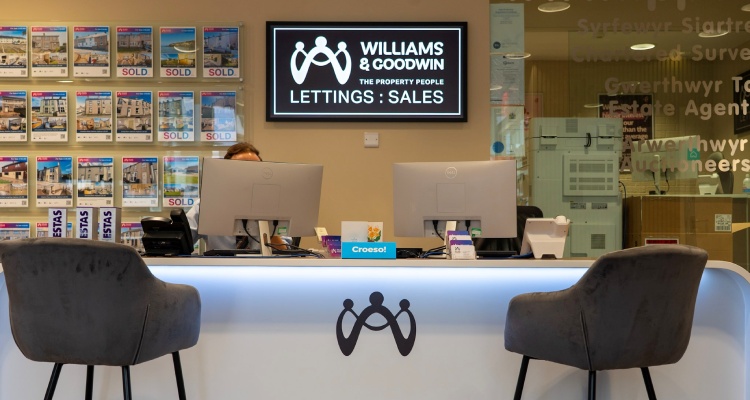
Williams and Goodwin Estate Agents, located on Stanley Street, has been transformed as part of the Holyhead Townscape Heritage programme, which is restoring historic buildings and shopfronts across the town centre.
The work has restored the building’s frontage to reflect its original appearance from around 100 years ago, while the company has also invested in improvements to the interior.
The project is one of a number of improvements being delivered through the £3.25 million Holyhead Townscape Heritage programme, funded by the UK Government and the National Lottery Heritage Fund through the Isle of Anglesey County Council. The aim is to improve the appearance of Holyhead town centre, attract visitors and encourage further investment in the area.
The investment comes as Williams and Goodwin celebrates its 25th anniversary this year. The company employs five full-time staff in Holyhead and a total of 25 people across its wider business, with also has offices in Llangefni and Bangor. In 2025, Williams and Goodwin was recognised as the Best Welsh Estate Agency and Best UK Letting Agent.
The Stanley Street office is also home to a branch of the Principality Building Society, the only remaining building society in Holyhead.

Director Melfyn Williams said the investment had given the town a renewed confidence and much needed boost.
“Seeing the shopfront restored to its original character has made a real difference, and we’re delighted to have been part of this regeneration work. The investment in the town is helping to create a more attractive environment and has already started to encourage more people to visit and spend time here.
“It has also given businesses like ours confidence to continue investing in Holyhead and supporting the local community.”
Councillor Gary Pritchard, Leader of Isle of Anglesey County Council and portfolio holder for Economic Development, said:
“Projects like this show the positive impact that heritage-led investment can have on our town centres. Restoring historic buildings not only protects Holyhead’s unique character but also creates a more welcoming environment for residents, visitors and businesses.
“The Townscape Heritage Initiative is part of a wider programme of investment that is helping to revitalise Holyhead and create opportunities for the future.”
Work is continuing on a number of properties across the town centre as part of the programme.
The post Holyhead Estate Agency Unveils Restored Historic Shopfront appeared first on Williams & Goodwin.
]]>The post Key Areas & Streets in Llangefni appeared first on Williams & Goodwin.
]]>Llangefni divides fairly naturally into a handful of distinct zones, and where you buy within the town can make a difference – and this applies both for the price you pay and what you get for it.
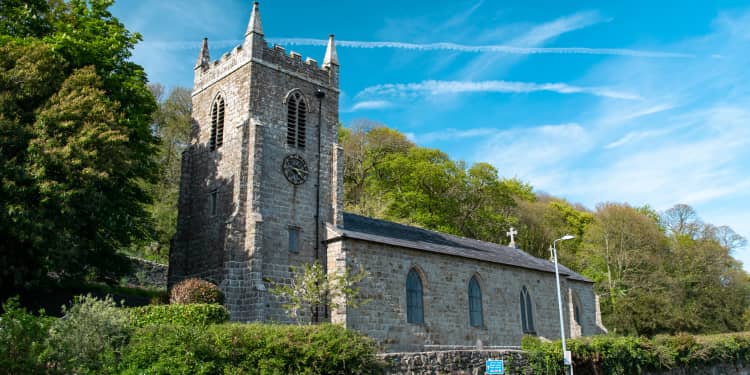
The town centre and its orbiting streets offer period character and walkability, while the post-war estates to the north and east of the centre offer more space and better school access. Meanwhile, the newer developments on the outskirts offer some larger, modern homes.
This guide helps you to build up an overall picture of the town by describing its key streets and areas, drawing on local market knowledge from Williams & Goodwin.
The Main Streets & Roads in Llangefni
A small number of roads consistently attract stronger demand and quicker sales. The underlying reasons tend to be consistent: proximity to schools, good road access, a mix of housing types, or simply a position within the town that buyers return to again and again.
Church Street / Stryd yr Eglwys is the historic spine of the town centre, hosting many of the local shops. It includes a mix of period townhouses and terraced properties, some with listed status, close to the weekly market the town’s main amenities.
Bridge Street / Stryd y Bont runs close to the Afon Cefni and has a variety of older terraced and semi-detached homes. It’s central, close to Dingle nature reserve, and is a great place to live near the heart of the town. The terraced homes here are typically compact, sporting 2-3 bedrooms which makes it more accessible for first-time buyers who are looking to enter the market.
Glanhwfa Road is considered one of the more premium address in Llangefni, which is well deserved given the house types there and amenities nearby. First of all, it runs close to Ysgol Gyfun Llangefni, the main bilingual comprehensive, and to Cefni Hospital. The housing stock is composed of large semi-detached and detached homes, often with driveways and rear gardens. Many properties are comfortably set back from the road and overlook it, creating a distinct layer of privacy. You’ll also notice a few, substantial period properties and buildings at the upper end of the road nearest the town centre.
Lon Talwrn / Talwrn Road provides access to the A55 to the north of the town (and extending onwards from it) and includes some of the town’s larger detached homes, with good garden space and off-street parking. Land Registry data for the Talwrn area points to sales of detached homes reaching £299,000–£445,000, reflecting the larger properties found there. This is one of the routes out of the town toward the expressway and attracts buyers who need fast commuter access alongside more space.
Greenfield Avenue is distinctive for its detached bungalow stock with good-sized plots, which is relatively scarce in the LL77 postcode. These can command a corresponding premium over the terrace-heavy parts of town. Along the same road (opposite the bungalows) you also have a fine selection of newer, detached homes with large drives and gardens.
Distinct Areas in Llangefni
While relatively small, you can identify several distinct areas in Llangefni which appeal to different house-hunters. Here’s an overview of what you’ll find:
- The town centre and conservation streets. These include Church Street and the market, containing the oldest housing stock in Llangefni. Most properties here are Victorian terraces, commercial properties and period townhouses (some listed) – and compose much of the town centre. Naturally, this area appeals to buyers who want the town on their doorstep, or business owners who are keen to rent a commercial premises where footfall is highest.
- The Glanhwfa Road corridor. This sits to the north-east of the centre. Streets in this part of town maintain demand because the reasons for buying there don’t change: families want to be in the secondary school catchment, and the hospital draws key workers and those wanting to comfortable access to healthcare.
- Bryn Meurig is a residential estate that branches out to the east of the town centre. Here, you’ll discover detached homes and semis with generous proportions. Equally, the streets themselves are far more spacious than those closer to the town centre, with lots of room for parking. It’s a settled, established neighbourhood that attracts families and those looking for a bit more open space.
- The outskirts and newer developments. These include new housing developments like Parc y Coed (the most notable) and similar schemes on the edges of town, which constitute the newest part of Llangefni’s housing stock. These tend to be detached and semi-detached homes built since the early 2000s, with off-street parking, modern insulation, and rear gardens.
- Ffordd Corn Hir is worth noting specifically because Ysgol Corn Hir primary school is located there, making it a natural focal point for buyers with primary-age children.
- Rhostrehwfa – This scenic village lies to the southwest of Llangefni, with plenty of large, spacious properties with good grounds. It also has the advantage of sitting on a high ridge which overlooks the the River Cefni valley.
Property Price Variation in Llangefni
The spread of prices across Llangefni is meaningful. Land Registry data (via the major property portals) shows a town-wide average of around £215,866 across all property types. But those averages mask a real range driven by property type, school proximity, parking, and outdoor space.
The most reliable way to understand price variation in Llangefni is by property type rather than by individual street, as the number of transactions in a given year is quite modest.
| Property Type | Typical Sold Price |
| Terraced houses | £195,720 |
| Semi-detached houses | £203,660 |
| Detached houses | £256,227 |
| Bungalows (detached) | £271,000* |
*Bungalow prices based on current portal listings due to an absence of historical data
The main factors that drive differences between otherwise similar homes:
- Property type and size – detached and bungalows command the largest premiums; compact terraces sit at the lower end.
- School catchment – proximity to Ysgol Gyfun Llangefni and Ysgol Corn Hir is likely a demand driver for family buyers.
- Off-street parking – a driveway adds meaningful value in streets where on-street parking is otherwise the only option.
- Outdoor space – a usable rear garden is noticeably more valuable in the town centre, where many terraces have only a small yard.
Hidden Gems & Overlooked Streets in Llangefni
The best streets aren’t always the best known. Llangefni has plenty of streets which offer excellent value for a broad base of buyers and tenants. See a couple of examples below:
Bro Ednyfed is a residential estate that tends to be overlooked in favour of more centrally positioned streets. Listings shows a 12-month average of around £296K, with significant value growth since 2023. Current listings show a range of property types from two-bedroom semis to larger detached homes, so there’s more variety on the estate than a first glance might suggest.
Pencraig Estate offers affordable family homes with off-road parking and gardens of a reasonable size. Listings show a 12-month average of around £195,000 (below the town-wide average) making it one of the more accessible entry points in Llangefni for first-time buyers.
Rental & Owner-Occupier Areas in Llangefni
Anglesey as a whole skews toward owner-occupation. ONS Census 2021 data shows the island has a higher rate of owner-occupation than the Welsh average, and that pattern is reflected in Llangefni.
Within the town, rental activity is naturally concentrated in areas where there’s a tenant pool. Coleg Menai’s Llangefni campus is on Penmynydd Road on the outskirts of the town, and it draws students and part-time learners who need accommodation within reach. Bryn Cefni Industrial Park, approximately one mile south-east of Llangefni, and wider employment at Parc Menai generate demand from key workers. Current listings on major portals and TPPUK’s listings show rental activity spread across the town rather than concentrated heavily in any single street.
ONS private rent data in May 2026 puts the average monthly private rent on the Isle of Anglesey at £705, much lower than the Wales average of £828 and the UK average of £1,374, which makes Llangefni one of the most renter-friendly markets in Wales.
Property Developments & New Infrastructure in Llangefni
New development in Llangefni is modest in scale but ever-present. Smaller new-build schemes on the edges of town continue to bring energy-efficient detached and semi-detached homes to market, meeting demand from families and downsizers who want a modern specification without having to travel far.
The North Wales Growth Deal, backed by both the UK and Welsh Governments, includes investment in transport, digital infrastructure, and business facilities across the region. Bryn Cefni Industrial Park and Parc Menai bring employment to the immediate area, which in turn supports steady demand for housing in and around Llangefni.
Streets & Areas in Llangefni – FAQ
The streets closest to Ysgol Gyfun Llangefni (including the Glanhwfa Road corridor) are consistently popular with families. Ffordd Corn Hir is worth looking at if you’re focused on primary school catchment, as Ysgol Corn Hir is on that road.
Pencraig Estate and Bro Ednyfed offer some of the town’s most accessible price points. Compact terraces in the town centre can also offer entry-level pricing, though parking is sometimes more limited.
Rental demand exists, driven mainly by Coleg Menai students, key workers, and those employed at Bryn Cefni Industrial Park and Parc Menai. Supply is limited across the town, which keeps void periods relatively short for well-maintained properties.
Property type is the dominant factor. Detached homes and bungalows command significantly more than terraces of a similar age. After that, school catchment, off-street parking, and garden size are the main variables that separate otherwise similar properties.
Ffordd Corn Hir and Bro Ednyfed attract growing interest from buyers looking for value alongside school access. Newer estate developments on the outskirts – like Parc y Coed – continue to draw buyers who want energy-efficient homes without the cost of renovation.
Find your Llangefni home with TPPUK today
Whether you’re buying for the first time, looking for the right school catchment, or trying to find a let that stacks up financially, Llangefni has more variety by area than its size might suggest. Getting familiar with the different zones before you start viewing makes the whole process considerably more straightforward.
Contact Williams & Goodwin or browse our current Llangefni listings to find the right home for you. Our office is on Church Street in the town centre so feel free to visit in person.
The post Key Areas & Streets in Llangefni appeared first on Williams & Goodwin.
]]>The post Guide to Llangefni Property & Architecture For House-Hunters appeared first on Williams & Goodwin.
]]>Llangefni’s housing stock tells the story of several centuries of consistent development and expansion, with stone-fronted terraces from the Victorian era sitting a few streets away from 1950s semis – and both within reach of new estates on the edge of town.
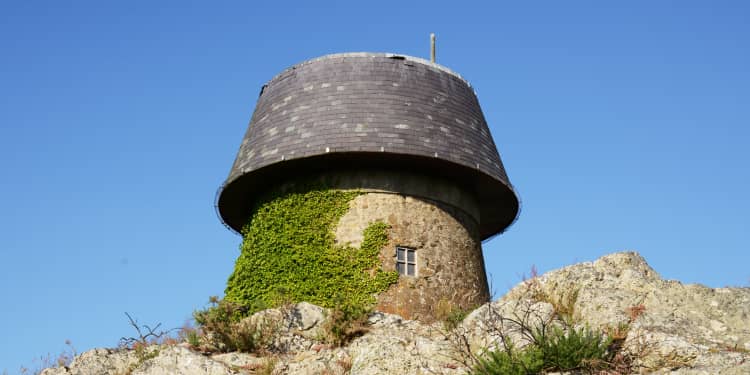
That variety is attractive, and you’re likely to find something that suits your taste. This guide covers the main property types you’ll find in Llangefni and what to expect from each – take a look now and see what this central town in Anglesey has to offer.
Types of Properties in Llangefni
So, let’s explore the core collection of homes that Llangefni has to offer…
Terraced houses are the most common type in the older parts of town. Most date from the late 19th and early 20th centuries and were built to house a growing working population. They tend to have stone or rendered brick façades, slate roofs, and small front yards or rear gardens. Many have had windows and kitchens updated over the years, though the footprint and room layout stays fairly consistent – they typically accommodate two or three bedrooms arranged over two floors, with a galley kitchen and a back-to-back garden arrangement.
Semi-detached and detached houses became more common from the post-war period onward. Estates built during the 1950s and 1960s brought a different scale to the edges of town – with more generous plots, driveways, and gardens, alongside the practical layout of a house designed for family life. These properties are common in areas like Bryn Meurig and on roads off Glanhwfa Road.
Bungalows appear more frequently on the outskirts and on quieter residential roads. They attract buyers looking for single-floor living and are generally popular with those downsizing, as well as buyers with accessibility needs. Plot sizes vary considerably.
New-build homes have appeared on the edges of Llangefni over the past two decades, on schemes like Parc y Coed and other smaller developments. These offer open-plan kitchen-diners, off-street parking, energy-efficient glazing and insulation, and low maintenance – what’s not to love? These things have become noticeably more important to buyers since energy costs rose sharply over the past few years.
Conversions are less common but do exist. A small number of former chapels, public buildings, and commercial premises have been converted into homes or apartments, offering unusual layouts and original detailing. These tend to be one-offs rather than a consistent stock type.
Conservation Areas & Listed Buildings in Llangefni
Llangefni’s town centre includes a number of listed buildings that reflect its history as Anglesey’s administrative and market centre. Listed buildings in the town are recorded by Cadw, the Welsh Government’s historic environment service, and include structures such as the Bull Hotel, Market Hotel, and Llangefni Town Hall, all of which date from the 19th century.
Streets including Bridge Street and Church Street feature several Grade II listed properties. These carry planning requirements that affect what owners can do to exterior elements such as windows, doors, and façades. Anyone considering purchasing a listed property in Llangefni should factor in the additional responsibilities:
- Most exterior or structural changes require listed building consent
- Replacement windows and doors on listed buildings generally need to match the original materials and style
- Energy efficiency improvements are possible but require careful planning and specialist advice
- Maintenance costs tend to be higher than for unlisted properties of a similar size
Buyers interested in period homes in Llangefni’s town centre should check Cadw’s records and seek advice from a solicitor experienced in listed buildings before making an offer. Williams & Goodwin can point you in the right direction – with any historic homes displayed on our listings.
Typically Sought-After Properties in Llangefni
Certain streets in Llangefni attract consistent demand and faster sales. The factors that drive that tend to be the same ones that drive property values generally: school proximity, ease of access to the A55, and walkability to the town centre.
- Period terraces near the town centre: These can be found near the centre of town, and draw in buyers who want original character and a short walk to the local shops. A few of these properties are listed, so this is worth looking out for.
- Family semis and detached homes: These appear most often on established estates such as Bryn Meurig and roads off Glanhwfa Road – partly because of their proximity to Ysgol Gyfun Llangefni and Ysgol Corn Hir. These homes often enjoy spacious driveways, generous gardens, and more internal space than older Victorian terraces.
- Newer developments: Homes that sit within developments such as Parc y Coed appeal to buyers who want low maintenance and impressive energy performance (with lower bills). While these homes lack the period character of the venerable, stone-built properties closer to the town centre, they are usually larger in terms of square-footage and easier to look after.
Recent Developments & New Builds in Llangefni
New housing development in Llangefni has taken place primarily on the periphery of the town, where larger plots are available. Schemes like Parc y Coed have introduced energy-efficient homes to a market where older stock often needs significant work to reach modern EPC ratings.
New builds in Llangefni typically include:
- Open-plan kitchen-diners
- Off-street parking for at least two vehicles
- Double glazing and cavity wall or solid wall insulation designed to current standards
- En-suite bathrooms alongside a family bathroom
- Rear gardens with patio areas
The Welsh Government has set targets for new housing across Wales, and Anglesey County Council’s local development plan includes provision for additional homes in and around Llangefni. Buyers interested in new-build options should check current availability through Williams & Goodwin.
The North Wales Growth Deal includes transport and digital infrastructure investment across the region, which is likely to support further development activity over the coming years.
Llangefni Period Property Characteristics
Period properties attract buyers with their unique character, whether it’s a traditional stone-built cottage or a grand property from the Victorian era.
In Llangefni, the historic housing stock shares several architectural features that distinguish them from post-war and modern stock:
- Stone or brick exteriors, often with rendered finishes, and slate roofs that use local building materials
- Sash windows in many of the older terraces – often replaced with modern timber or uPVC alternatives in non-listed buildings, though listed properties are required to use sympathetic materials.
- Fireplaces in the main living rooms and sometimes in bedrooms, with original surrounds in better-preserved examples.
- High ceilings by modern standards, particularly in the ground-floor reception rooms.
- Panelled internal doors and original staircase details in properties that haven’t been heavily modernised.
These features are a draw for buyers who want character, though they come with practical considerations for those concerned about energy efficiency and ongoing maintenance. Home surveys are an especially valuable tool if you’re considering a period property.
Typical Property Sizes in Llangefni
Most properties in Llangefni fall into a fairly consistent range by type. The following table gives a rough guide based on Land Registry and ONS data, though individual properties will always vary – view the table below as an indicator rather than a ‘rule’.
| Property Type | Typical Bedrooms | Approx. Floor Area |
| Terraced house | 2–3 | 700–900 sq ft |
| Semi-detached | 3 | 950–1,100 sq ft |
| Detached house | 3–4 | 1,100–1,400 sq ft |
| Bungalow | 2–3 | 800–1,100 sq ft |
| New-build family home | 3–4 | 1,000–1,400 sq ft |
Flats and one-bedroom properties are relatively scarce in Llangefni. Most conversions of houses or commercial buildings result in two-bedroom units rather than studios or one-beds. Three-bedroom homes, whether terraced, semi, or detached, are the most common type on the market at any given time.
Gardens & Outside Spaces in Llangefni
Outside space is widely available in Llangefni, though what you get depends significantly on the property type and location.
- Victorian terraces in the town centre typically have small enclosed rear yards or compact gardens – enough for bins, a shed, and a modest seating area, but not what you’d call expansive. Front gardens are often minimal or have been paved over for practical reasons – though this does vary.
- Post-war semis and detached houses generally offer more: a driveway to the front, and a rear garden with lawn, patio, and often enough space for play equipment or a vegetable area. These gardens are among the more practical available in the town and are a common reason buyers opt for the estate-style roads over the older terraces.
- New-build homes tend to maximise the plot, with off-street parking to the front and a manageable rear garden that’s easy to maintain. Some newer developments also incorporate green corridor planting between properties.
Properties on the southern and eastern edges of Llangefni, where the town gives way to open countryside fairly quickly, can include larger gardens and, on occasion, views across the surrounding fields.
Llangefni Property Types FAQ
Three-bedroom semi-detached and terraced houses make up the bulk of the market. Detached homes are available but tend to cost more and sell quickly when they come up.
Recent data from the Land Registry shows an average price of around £215,866 across all types. Terraced homes sit closer to £191,000 and detached properties average around £251,000.
Yes, though supply is limited at any one time. New-build detached and semi-detached homes on the town’s outskirts offer modern energy performance and low maintenance, and they tend to attract buyers who want to avoid renovation work.
Most external changes require listed building consent, and maintenance costs are typically higher than for unlisted equivalents. It’s worth instructing a solicitor with listed building experience and commissioning a full structural survey before exchanging.
New builds will generally achieve B or C ratings on their EPC. Older terraces and semis can often reach C or D with insulation and glazing upgrades, though some of the older town-centre stock is harder and more expensive to improve. It’s worth checking the EPC before making an offer, particularly if running costs matter to your budget.
It’s common on post-war and newer estates but less so on the Victorian terraced streets in the town centre, where on-street parking is the norm.
Terraced homes in the centre tend to have small rear gardens or yards. Semis and detached homes on the peripheral estates generally have more generous gardens, and some newer detached homes include both a front driveway and a rear lawn.
Find Your Perfect Property in Llangefni
Llangefni’s property market has a genuine range of options across different styles and budgets. For advice on what’s available and what each property type involves in practice, contact Williams & Goodwin – our team knows the local stock well and can help you find the right fit.
The post Guide to Llangefni Property & Architecture For House-Hunters appeared first on Williams & Goodwin.
]]>The post Discover Llangefni: A Guide to the Local Area appeared first on Williams & Goodwin.
]]>
It rests along the banks of the Afon Cefni, with the A55 expressway within easy reach and Anglesey’s beaches and countryside on the doorstep. Whether you’re a first-time buyer, relocating for work, or thinking about a quieter pace of life, Llangefni is an excellent place to begin looking.
Llangefni gets on quietly with the business of being a working market town, with supermarkets, schools, a hospital, independent shops, and a weekly market all within walking distance. Welsh is the first language for many here, and the town has a strong cultural identity that newcomers tend to find genuinely welcoming.
Why Live in Llangefni?
The case for Llangefni tends to rest on a few practical things that matter a lot to buyers: the price, location, and the highly convenient mix of amenities spread across the town.
On price, the town compares well with coastal Anglesey and with towns on the mainland. Land Registry data puts the average sold price in Llangefni at around £215,000, which is noticeably below the wider Anglesey average. For those priced out of more popular island locations, Llangefni offers a great deal of value for money.
On location, the town’s central position means you’re rarely more than 20 mins’ drive from anywhere on the island. For commuters, the A55 gives fast access to Bangor, with the crossing to the mainland from there. That central position also means that Anglesey’s stunning AONB coastline is wide open to you, with its unspoilt nature reserves and famous beaches to explore.
Key reasons people enjoy living in Llangefni include:
- Central location: quick access to all parts of the island and the A55 for mainland journeys
- Good value: house prices sit below the Anglesey average, giving buyers more choice per pound
- Local schools: Welsh-medium and bilingual education with good reputations locally
- Everyday services: supermarkets, healthcare, and shops all close together
A Concise History of Llangefni
Llangefni slowly grew and came to prominence around the parish church of St Cyngar, which gave the town its name – llan (church enclosure) and Cefni (the river on which it stands). It developed as a market town over several centuries, and in the 19th century became Anglesey’s administrative centre, a function it still holds today as the county town of the Isle of Anglesey council area. The railway arrived in the 19th century, though passenger services ceased in the mid-20th century. The market, which has roots going back to the 13th century, continues on Thursdays and Saturdays in the town centre.
Oriel Môn is the island’s main museum and gallery, and is located in Llangefni, which charts the area’s history, art, and natural life, including archaeological finds from across Anglesey.
Llangefni Property Market & House Prices
Llangefni’s property market has performed well against the wider Welsh picture. According to the ONS, the Isle of Anglesey had modest annual house price growth at 1.6%, with the island-wide average house price reaching £235,000. Llangefni itself tends to sit below that island average, making it one of the more accessible entry points to the Anglesey market.
Rightmove shows the average sold price in Llangefni at around £215,866 over the past year, with Zoopla recording a similar 12-month average of £216,769. By property type, terraced houses typically sell for around £195,720, semis for around £203,660, and detached homes closer to £256,227.
| Property Type | Average Price |
| Terraced | £195,720 |
| Semi-Detached | £203,660 |
| Detached | £256,227 |
Source: Land Registry Data
For renters, the ONS private rent data shows the average monthly private rent on the Isle of Anglesey at £705 as of May 2026. Rental supply in Llangefni itself fits the relatively small size of the town, with prices that vary accordingly.
Transportation in Llangefni
For most people living in the town, the car is the primary way of getting around, with the A55 expressway accessible within minutes and providing fast links across the island and over the Britannia Bridge to the mainland.
Llangefni has no railway station of its own anymore, and the nearest is Llanfairpwll, approximately 7 miles away, with services to Bangor, Holyhead, and onwards to Chester and England.
That said, there are alternatives:
- Bus services: regular routes connect Llangefni to Bangor, Holyhead, and island villages. Timetables are available via the Anglesey Council website
- Cycling: the Lôn Las Cefni is an 11-mile traffic-free cycle route connecting Malltraeth to Cefni Reservoir, passing through the town centre
- Parking: several council-run car parks serve the town centre, details and season ticket pricing are on the Anglesey Council parking pages
Schools & Education in Llangefni
Education in Llangefni is primarily Welsh-medium, which reflects the town’s character and the island’s bilingual culture. The main schools include:
- Ysgol y Graig — primary school for ages 3–11, Welsh-medium
- Ysgol Corn Hir — primary school, also Welsh-medium
- Ysgol Gyfun Llangefni — the main bilingual comprehensive secondary, inspected by Estyn in January 2023
For post-16 and adult learners, Coleg Menai’s Llangefni campus offers vocational and further education courses locally. Bangor University is roughly 12 miles away for degree-level study.
School catchment areas are likely to have a real effect on property values here. Streets within the catchments for Ysgol Corn Hir and Ysgol Gyfun Llangefni tend to see sustained buyer demand – something worth factoring in if you’re buying with children in mind.
Local Amenities & Shopping in Llangefni
The town centre covers most everyday needs without you needing to travel further afield. The main supermarkets (Asda, Aldi, and Lidl) are all within the town, and the high street has a mix of independent shops including a butcher, bakeries, clothing stores, and a Welsh-language bookshop. There’s also a post office, library, and branches of Lloyds and HSBC.
The weekly Thursday and Saturday market is a fixture of local life, drawing people from across the island for local produce, household goods, and general trade.
For a wider range of shops, Bangor is around 20 minutes away by car and has larger retail parks and more specialist options including a Waitrose in nearby Menai Bridge.
Restaurants, Cafes & Food in Llangefni
Llangefni has several places to eat and drink. Here’s a few of the notable options:
- Foundry Vaults, Market Inn, and Tafarn Y Railway: traditional pubs with local ales and food to enjoy.
- Caffi’r Oriel, Y Cwt Coffi, The Coffee Hut Llangefni: these cafes offer plenty of treats, deli options, and finely brewed coffees.
- Takeaways: there are plenty of takeaway stops, including Indian, Chinese, Italian, and fish and chip shops spread throughout the town centre.
For a wider range of restaurants and bars, most people head to Bangor or to the coastal towns on the island.
Local Health & Medical Centres in Llangefni
Primary healthcare is well-covered in Llangefni. The town has GP practices including Tal y Bont and Coed y Glyn, several dental surgeries, and a pharmacy. Cefni Hospital is in the town itself and provides community health services.
For accident and emergency and specialist care, Ysbyty Gwynedd in Bangor is the nearest full hospital, roughly 12 miles away. A minor injuries unit at Ysbyty Penrhos Stanley in Holyhead is also accessible for less urgent treatment.
Parks & Green Spaces in Llangefni
For a small market town, Llangefni has an impressive range of green spaces to enjoy.
The Dingle (Nant y Pandy) is a 25-acre local nature reserve on the northern edge of the town centre – a steep-sided wooded valley carved by glacial meltwater, with boardwalks, sculptures, ancient oak woodland, and a good chance of seeing a kingfisher or, during spring, carpets of bluebells. It also serves as a red squirrel habitat, which is something the local authorities carefully protect. The reserve connects to the Lôn Las Cefni cycleway, which leads north to Llyn Cefni – which is a reservoir with many opportunities for birdwatching, angling, and picnic spots.
Other highlights nearby:
- Lôn Las Cefni – 11 miles of largely traffic-free cycling and walking between Malltraeth and Cefni Reservoir
- Plas Arthur Leisure Centre – swimming pool and gym in the town
- Llangefni Skatepark – concrete park for skateboarding, BMX, and scooters
Anglesey’s coastal path and its beaches are all within easy driving distance for day trips.
Llangefni FAQs
Yes. It offers an accessible price point for Welsh buyers on the island, with a good range of properties and local amenities. The Anglesey market has seen strong price growth in recent years, and Llangefni tends to draw consistent demand from local buyers and those moving over from mainland Wales.
Property listings have shown average prices in the region of £215,000–£217,000 over the past 12 months, with detached homes reaching around £251,000 and terraced properties closer to £191,000.
The A55 gives fast road access to Bangor and the mainland. Bus services connect to Holyhead, Bangor, and surrounding villages. The nearest train station is Llanfairpwll, about 7 miles away.
The main schools are Ysgol y Graig and Ysgol Corn Hir (both primary, Welsh-medium) and Ysgol Gyfun Llangefni (bilingual comprehensive secondary). Coleg Menai offers further education locally.
It’s well-suited for families, with good schools, green spaces, a leisure centre, affordable housing, and supermarkets all within the town.
Rental supply is limited relative to demand, particularly for two- and three-bedroom homes. Average rents on Anglesey sit at around £707 per month according to ONS data for February 2026.
Ready to Find a Home in Llangefni?
Llangefni is an excellent place to call home in the heart of Anglesey. If you’d like advice on buying, selling, or letting in Llangefni, get in touch with Williams & Goodwin – we know this market well and we’re here to help you make the right move.
The post Discover Llangefni: A Guide to the Local Area appeared first on Williams & Goodwin.
]]>The post What Landlords Think Lettings is vs What it Actually Takes to Manage a Property appeared first on Williams & Goodwin.
]]>
Those are only the tip of the iceberg. A fully managed service covers everything from the initial marketing and finding a contract holder to handling the financial, legal and everyday responsibilities that will help protect your investment and offer peace of mind, that’s all without even thinking about keeping pace with the ever changing legislation.
A property management company will market your property and arranging viewings to contract holder referencing, ensure you are compliant with Rent Smart Wales, carry out inventories and check outs to help support any deposit disputes, maintenance coordination, rent reviews, contract renewals, as well as a variety of other work. There is always something needing to be done behind the scenes at every stage of the process.
Landlords in Wales also need to keep up with constantly evolving legislation under the Renting Homes (Wales) Act, alongside ongoing safety and compliance requirements. Ensuring a property remains compliant requires regular monitoring and management throughout the duration of the contract.
At Williams & Goodwin, we have a dedicated property management team focused on supporting landlords through every stage of the letting process. We pride ourselves on doing the work so that landlords never have to worry as it’s already being taken care of.
If you’re a landlord and your time is important to you, why not consider using a property professional like Williams & Goodwin to help give you back some of your time, and help you make the most of your property investment.
Call our team now on 01248 72 40 40
The post What Landlords Think Lettings is vs What it Actually Takes to Manage a Property appeared first on Williams & Goodwin.
]]>The post The Deposit Myth That’s Keeping North Wales Buyers Stuck in Rented Homes appeared first on Williams & Goodwin.
]]>
The research surveyed renters who were planning to buy in 2026. It found that 39% believed they needed a deposit of at least 10% before they could even consider applying for a mortgage. Only half correctly identified 5% as the typical minimum. That gap between perception and reality is significant (and costly), in terms of time spent saving for a target that doesn’t actually exist.
What the numbers mean in practice
On a £200,000 property, which is a realistic price in many parts of North Wales, the difference between a 5% and a 10% deposit is £10,000. For someone saving £500 a month, that’s an additional 20 months of waiting. For many renters, that’s rent paid, savings delayed and the goalposts apparently never getting any closer.
The cruel irony is that while buyers are saving towards an inflated target, lenders have been quietly expanding their range of low-deposit mortgage products. 95% loan-to-value mortgages are more accessible than many people realise, yet MAB’s survey found that nearly three quarters of would-be buyers were unaware they existed. Track-record mortgages – products that use a rental payment history to support a mortgage application, were unknown to 80% of respondents. Family-assisted options, including schemes where a relative’s savings or property are used to support the application, were unfamiliar to 70%.
Why it matters for first-time buyers in North Wales
North Wales offers genuine value compared to other areas of theUK, with a range of properties across Anglesey and Gwynedd that remain accessible to first-time buyers, particularly those with a small deposit and a solid employment history. But that affordability only translates into opportunity if buyers actually make their enquiries.
The MAB research also found that 31% of prospective buyers said they didn’t know how to get started with buying a home, separate from those citing deposit-saving as their main barrier. That’s a significant proportion of people who have, in effect, opted themselves out before speaking to anyone who could actually help.
Rachel Geddes, Strategic Lender Relationship Director at Mortgage Advice Bureau, put it plainly: “For many aspiring homeowners, the biggest barrier isn’t always the reality of the deposit required – it’s what they believe that number needs to be.” (via The Negotiator)
The first step costs nothing
If you’re renting in North Wales and wondering whether buying is within reach, the most useful thing you can do is have a conversation. Not a commitment, not an application – just a conversation. Finding out what you can actually borrow, based on your income, deposit and circumstances, is far more useful than calculating how long it will take to save another £10,000 towards a threshold that may not apply to you.
At Williams & Goodwin, we work with first-time buyers regularly and are happy to talk through what’s available in your area and price range. Getting that initial picture often changes things considerably. The deposit you think you need and the deposit you actually need may be very different numbers. It’s worth finding out.
The Williams & Goodwin offices at Holyhead and Llangefni also have agencies for the Principality Building Society where we could help you with saving account options.
So, if you are thinking about stepping onto the property ladder, please contact your local team who are here to help you realise your dreams.
Further reading: First-time buyers held back by ‘deposit myth’ – The Negotiator, May 2026
The post The Deposit Myth That’s Keeping North Wales Buyers Stuck in Rented Homes appeared first on Williams & Goodwin.
]]>